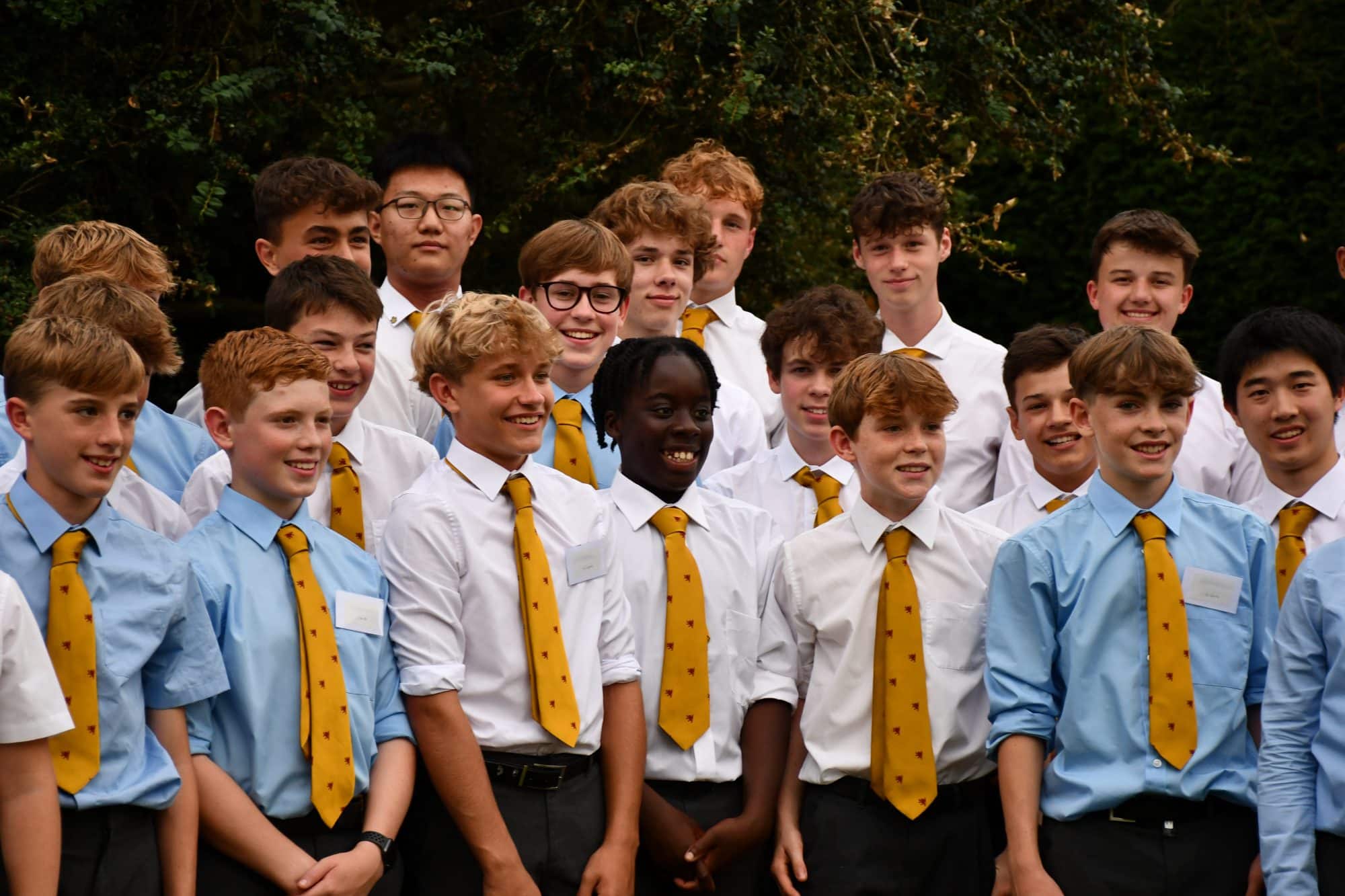
At Abingdon, we offer a range of scholarships which support our ethos of encouraging the very best academic achievement, as well recognising contribution at an exceptional level across our Other Half extracurricular programme.
All scholarship and award holders must meet the appropriate academic entry criteria to apply. Awards are reviewed annually, and are subject to satisfactory academic progress and behaviour.
Scholarships entitle the holder to a nominal fee remission of £300 per annum. Music scholarships and awards also come with free tuition on one instrument. It is possible to apply for further financial assistance through a means-tested bursary which can be worth up to 100% of day fees.
Scholarships and Awards Available
At 11+, there are a number of academic and music awards available, which are held for the duration of Lower School.
At 13+, academic and music scholarships are offered, with assessments taking place in the spring of Year 8. Students must first have a confirmed offer of a place at the school. Art, design & technology, drama and sport scholarships are also offered, but not until after joining Abingdon School, at the end of the third year.
At 16+, academic, music, sport, art, design & technology and drama scholarships are offered.
First Year (11+) Awards Third Year (13+) Scholarships Sixth Form (16+) Scholarships
Key Dates for 2025 Entry
| Academic | Music | Sport | Art | Drama | D&T | |
|---|---|---|---|---|---|---|
| 11+ | No application required | Pre-audition: 20 Nov 2024 Audition: 29 Jan 2025 | - | - | - | - |
| 13+ | w/c 24 Feb 2025 | 29 Jan 2025 | Internal assessments at end of third year | Internal assessments at end of third year | Internal assessments at end of third year | Internal assessments at end of third year |
| 16+ | No application required | 21 Nov 2024 (late Feb applicants considered) | 19 Nov 2024 | 19 Feb 2025 | 19 Feb 2025 | 19 Feb 2025 |
Key Dates for 2024 Entry
For students joining Abingdon in the third year 2024, we are still offering the full range of scholarship assessments in the Spring of Year 8. However, the application deadline has now passed and we are not accepting further candidates.
Students at UK based Prep schools will be advised on how to prepare for the scholarship process by their Prep school. Students attending other types of schools, including from the maintained sector and from overseas, should contact the Admissions office for further information.
| Academic | Music | Sport | Art | Drama | D&T | |
|---|---|---|---|---|---|---|
| 13+ | w/c 26 Feb 2024 | 31 Jan 2024 | 1 Feb 2024 | 2 Feb 2024 (Portfolio deadline 19 Jan 2024) | 5 Feb 2024 | 2 Feb 2024 (Portfolio deadline 19 Jan 2024) |