Why revision is like a meal
By Sarah Beynon, Head of Academic Support
What did you have for lunch today? Did you do a ‘grab and go’ quick bite or did you spend time sitting down savouring your food? Was it a balanced meal or junk food? Similar questions can be asked about how you learn and revise and these questions become particularly significant as we approach internal exams. How you prepare for exams is important in the same way that your nutrition is important in the build up to a big race or match. Let me explain…
Starting at the beginning – imagine you want to have a pizza. There are several ways you could get one, either you could order a take-away (requires funds), see if there is one in the freezer (quick but not always great tasting) or you could make one. If you decide to make one, which is harder work but more rewarding nutritionally and more tasty, you must have the ingredients. This brings us to our first parallel with learning, you can’t revise something if you haven’t learnt it and don’t have the materials to look at. So, your first step in the revision process is to check back over your class materials and homework and fill in any gaps. It is also important to check you understand what you are revising so give yourself time to ask your teacher if you are uncertain about any concepts or material.
Your ‘recipe’ for revision is your plan and your timetable; know what you are going to do and when you are going to do it. There are lots of tools out there to help you make a plan but a pen and paper or simple spreadsheet can be enough. Some helpful hints are given in this short video ‘How to create the perfect revision timetable’.
Pizza is known as ‘fast food’ and, much as you may like it, you couldn’t live on it; it is important to have a balanced diet to ensure you are fit and healthy and able to perform at your best. As with food, also with revision: you cannot only study the subjects you like as that would be to the detriment of your overall learning. All your subjects require time to be put into them to master them. This is why your timetable should allocate a specific amount of time to all subjects. Additionally, if you know you find something difficult, you can give a little more time to that subject but overall the time spent on each should be approximately equal. One thing you can do if you do find one subject more challenging than another is do it first; this is a bit like eating your vegetables before the rest of your main course (unless you are particularly fond of vegetables, of course)!
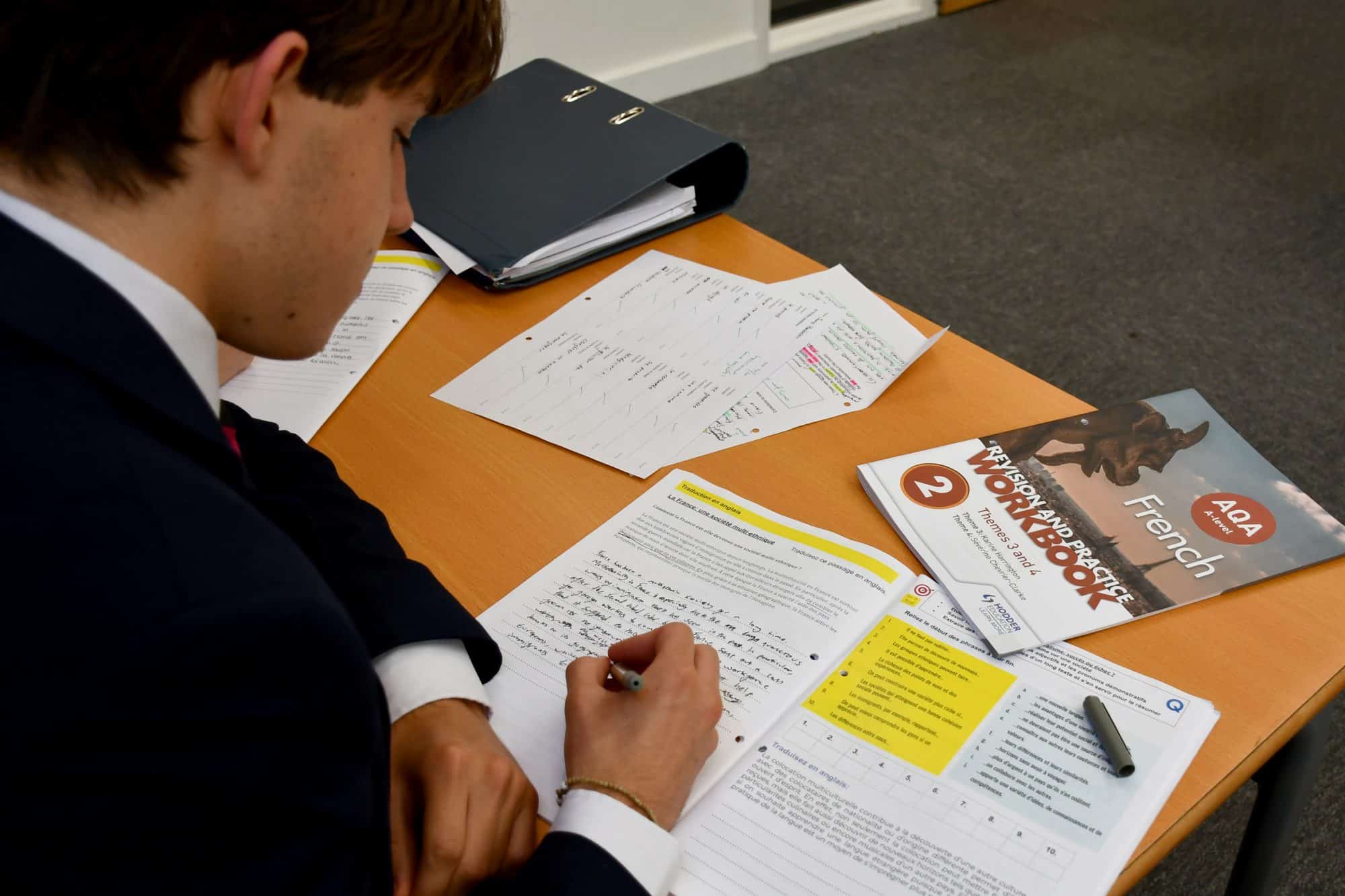
Variety is important, both in your diet and in your revision. Try different techniques to help you learn – perhaps mindmaps work well in History, flash cards in Sciences and ‘look, cover, write, check’ in languages. And what works well for you may be different from what works well for your friends, the same as some people like pineapple on a pizza and some think this is the last topping that should ever be there! This article from Inner Drive looks at intended vs actual revision behaviour and how to make revision effective.
Did you take a photo of your pizza before you ate it? Or did you just take a photo then throw the food away. Taking a photo of your food then not eating it is a bit like looking at your notes but not doing any more than that. You are familiar with how they look but haven’t digested them (this is called the illusion of fluency)! To revise effectively you need to ‘chew over’ your notes and other information you have been given and process it by turning it into a different form. Examples are making flashcards to summarise topics, turning them into a mindmap or other diagram or getting someone to test you on them. Testing yourself, or getting someone else to test you shows what you know and gives you the opportunity to practise recalling knowledge, which is what you will have to do in an exam. You can’t know what you know until you find out if you know it. And remember the forgetting curve? Don’t go over things just once but give yourself time to revisit material, after all you don’t just have one meal a week!
Once you have finished your revision session, review what worked and what didn’t and what you need to do next. This is the same as clearing up and means you are prepared for the next session.
What next? Go away and plan your revision in a way that will enable you to perform at your best and you can even reward yourself with a pizza at the end of it all!
References
Making a perfect revision timetable: https://www.youtube.com/watch?v=2UuJiwvfppg
Intended vs actual revision practices: https://www.innerdrive.co.uk/blog/intended-vs-actual-revision/
Retrieval practice, “Teach like a Champion 3.0”, Lemov D (2021)
Back to all Blogs