Towards a greener plate: tackling food waste at Abingdon
National figures present a stark reality: the UK generates 9.5 million tonnes of food waste annually. Beyond the financial cost, this contributes significantly to carbon emissions, as much of this waste is incinerated rather than being repurposed into fertiliser or green energy.
At Abingdon, we recognise that food waste is one of our largest environmental footprints. To address this, our Student Sustainability Development Group has been investigating practical, community-led solutions to help reduce our impact.
Learning from the Pavilion
Their research highlighted a telling difference between our two main dining areas:
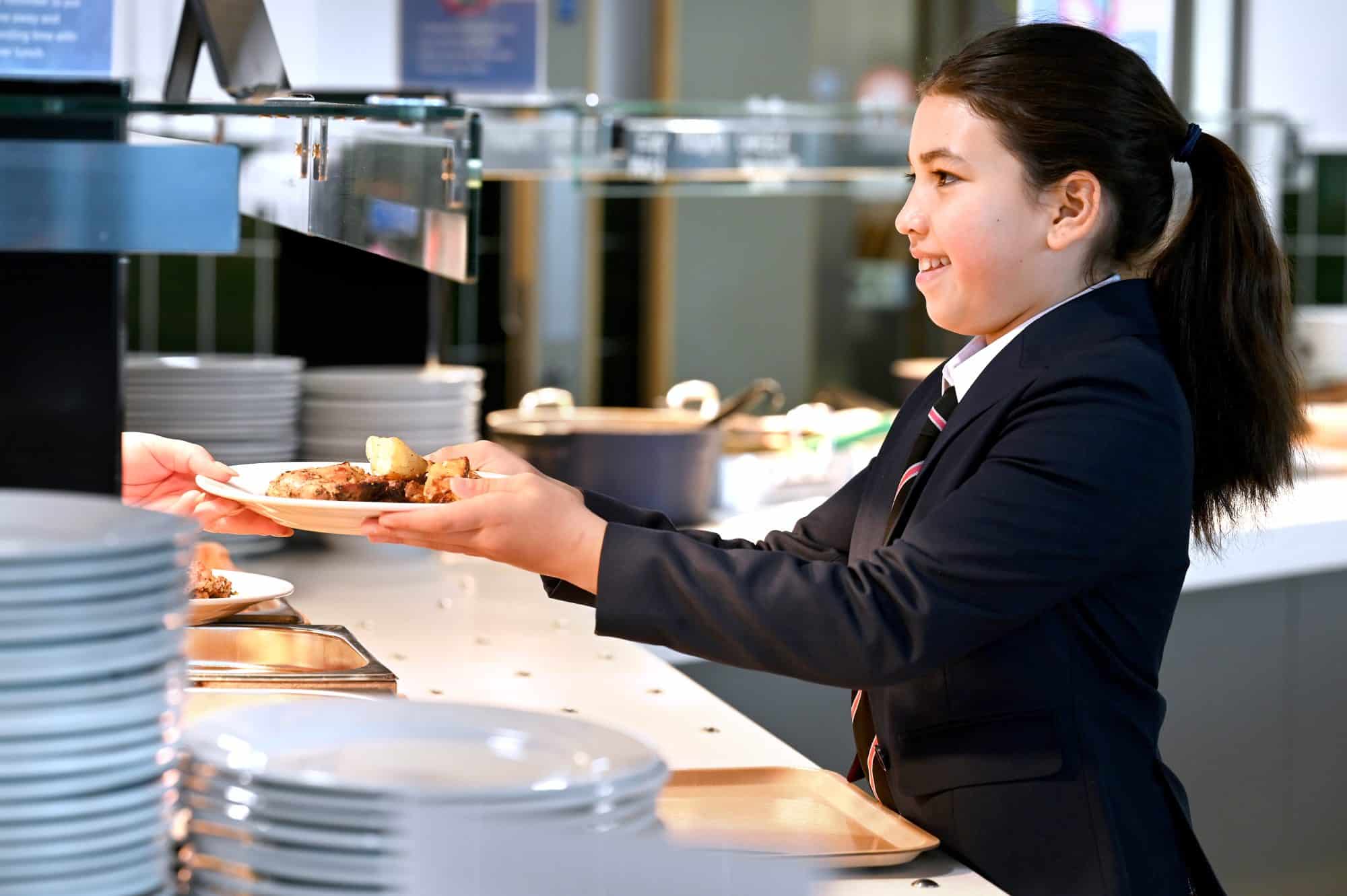
- The Dining Hall: a conveyor belt system where the catering team clear the plates.
- The Pavilion: a self-clearing system where students and staff dispose of their own leftovers.
Sustainability Development Group member, Elon, says: “Data shows that the Pavilion produces considerably less food waste per person. The theory is simple: visibility creates accountability. When we scrape our own plates, we are forced to confront exactly how much we’ve left behind.
“To test this theory, we are trialling the Pavilion’s “self-scrape” system in the Dining Hall on Tuesday 10 and Thursday 12 February. By shifting the responsibility from the catering team to the individual, we hope to heighten awareness of personal waste and its environmental consequences.
“This project is about more than just the weight of the bins; it is about cultivating a sustainability mindset. While a single plate of wasted food might seem negligible, the cumulative effect of over 1,000 students is vast.
“By building positive habits now, we are both reducing the school’s carbon footprint and reinforcing the importance of making conscious, responsible choices. Collectively, our small daily actions can lead to a world of difference.”
We can’t wait to find out the results!
Back to all Blogs