Remembrance
By Rev’d Paul Gooding, Chaplain
Earlier this year, I had the privilege of attending our Third Year History Battlefields Trip to the Somme. As part of the tour, the students visited The Ulster Tower, one of the first memorials ever constructed on the Somme, which was built as a memorial to the soldiers of the 36th (Ulster) Division who served during the First World War. It stands as a vivid reminder of those who never returned home and made the ultimate sacrifice.
Carved into the memorial are these poignant words:
“Those who at the call of King and country, left all that was dear to them, endured hardness, faced danger, and finally passed out of the sight of man by the path of duty and self sacrifice, giving up their own lives that others might live in Freedom. Let those who come after see to it that their names be not forgotten.”
While we were visiting the Ulster Tower, we met a relative of one of those soldiers. The relative was carefully cleaning the portland headstones and respectfully tending to the war graves. He went on to proudly tell us the story of his relative, Private William McFadzean.
William was a bomber in the Royal Irish Rifles during the Battle of the Somme. On 1 July 1916, while preparing grenades in a trench at Thiepval Wood, some grenades became live and an explosion in the trench was imminent.
William had to make a split-second decision. With no regard for his own safety, William threw himself over the box of grenades, knowing that he was putting his own life in mortal danger to protect those around him. William was killed. But only one other man was injured. His decision saved many lives that day.
For his bravery, William McFadzean was awarded the Victoria Cross posthumously — the highest military decoration for gallantry in the face of the enemy. His body was lost in the continued fighting and so his name is among those commemorated on the Thiepval Memorial to the Missing.
His name, however, is not forgotten.
As I reflected on William’s story, one phrase from the Ulster Tower kept returning to me: “giving up their own lives that others might live in Freedom.”
As we continued to tour the Somme, I was pondering William’s great loving sacrifice. I couldn’t help but notice a spiritual dimension to this, captured in the simple epitaph of Lance Corporal G. F. Timby of the Royal Warwickshire Regiment. He died on the Somme in January 1917; his epitaph read as follows:
“We loved thee well, but Jesus loved thee best.”
For me, this is where Remembrance connects deeply with the Christian story.
Across the Somme, row upon row of Portland Stone headstones bear the sign of the cross. Each one marks a life that was lost, but the cross also points beyond death — towards the great love of Jesus. Jesus’ sacrifice made it possible for death not to have the last word and to receive the eternal life that he offers.
And so, on Armistice Day, we remember. We pause to think of what sacrifice means. We pause our lessons to read out the names of the Old Abingdonians (OAs) who died in the Great Wars. We also take the opportunity, where possible, to visit the graves of OAs, too. Indeed, on the History Department Battlefields tour we visited the grave, as we do each year, of Serjeant (sic) L.O. Burge, OA, Royal Fusiliers, who died on the Somme on 11th July 1916, aged 23. The students all stood around his grave to pay their respects, as our guides explained what was happening on the battlefields when he died in 1916. The students also paused to remember the fallen at the very moving Menin Gate evening parade. In fact, this year, several students had the honour of laying a wreath as part of that ceremony. It was a truly poignant moment, added to by the bagpipes that were playing in the background.
In a wider context, we also remember with gratitude the enormous sacrifices made by so many men and women of our Armed Forces throughout history. We owe them a debt that we can never fully repay. Let those who come after see to it that their names be not forgotten.
Remembrance is not simply about looking backwards, however. It is also about asking what we do with the precious gift of life that we have been given and how we will live in the future. I vividly remember as a 17-year-old cadet in the CCF, standing on the D-Day beaches, the same ones in the opening scene of “Saving Private Ryan.” I still remember one grave, because he was also the same age as me at the time, only 17. He was a Lance Corporal, and the words of his epitaph read “I have spread my dreams under your feet, tread softly for you tread on my dreams.”
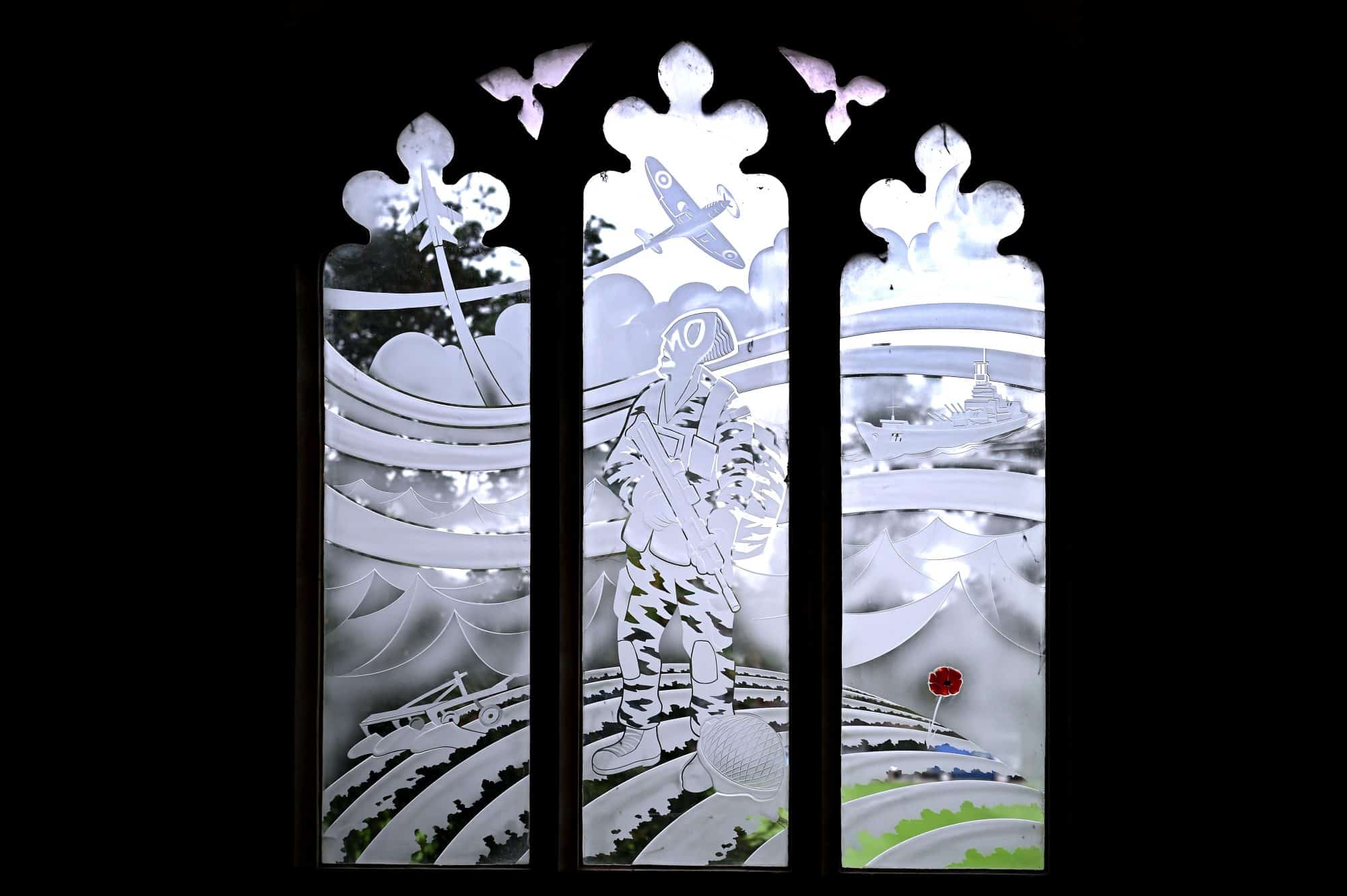
Let us therefore tread carefully into our futures, honouring the memory of the fallen. Not only with a poppy or a two-minute silence, but with the way we treat one another each day, the way we use our freedom, and the values we choose to live by. The silence of Remembrance is important. But perhaps what matters most is what happens when the silence ends. Let us allow the sacrifices of those who came before us shape the way we live today — with gratitude for the costly freedom that we have inherited, humility about its cost, and a determination to work for a world in which future generations will know peace.
Lest we forget.
Back to all Blogs